


1. Narikala Fortress (Narikala Fortress)

Where is here? Narikala Fortress is among the most visited places in Tbilisi by tourists today. For this reason, it is a must for those who come to Tbilisi to see this magnificent history, especially at night. Attracting attention from all over Tbilisi with its majesty, the castle can be seen from almost anywhere in Tbilisi. Having played an important role in the defense of Tbilisi, the fortress offers the most beautiful panoramic views of the city.
The fortress is sometimes called Shuris-tsikhe , meaning "Rival Fortress" . The walls of the fort date from various periods and the oldest of these remains dates from the 4th century when it was a Persian castle. Most of the existing walls were built in the 8th century by Arab rulers whose palaces were inside the walls. The structure is referred to as the "Main Castle" in Georgian sources. When the Russian ammunition stored in the castle exploded in 1827, the interior of the castle was in ruins, although the walls remained mostly intact.
Churches, Cathedrals
2. Sameba Cathedral (Holy Trinity Cathedral Of Tbilisi)
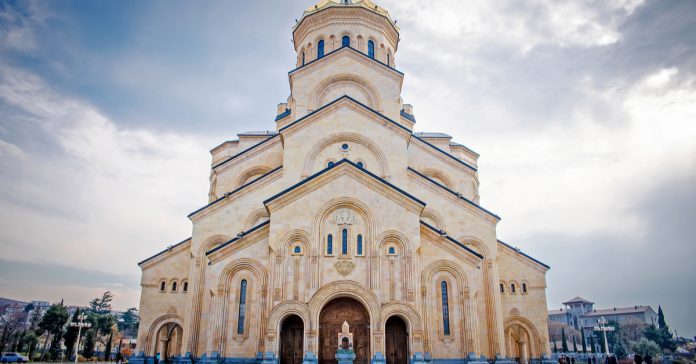
Where is here? A modern cathedral, Sameba Cathedral was built between 1995-2004 by architect Archil Mindiashvili. Located on the Elia Hill, this imposing church is not only the largest among the churches of Tbilisi but also among the churches of Georgia.
The idea to build the cathedral arose in 1989, on the occasion of the 2000th anniversary of the birth of Christ. Rocks from the Jordan River and Mount Zion and soil from Jerusalem were used as the foundation of the church. The construction of the temple was largely done by private donations. Discussions continue that the church was built on a point that was previously an Armenian cemetery.
When the architectural features of the church are examined, a dome sitting on eight buttresses stands out. On the western façade, there is a three-nave tomb. There is a very complex architecture in the southern and northern parts of the cathedral. There are various carved rows and arches on all four facades of the cathedral. The length of the Holy Trinity Church is 70 meters and the width is 64 meters.
3. Kashveti Church (Kashveti Church)
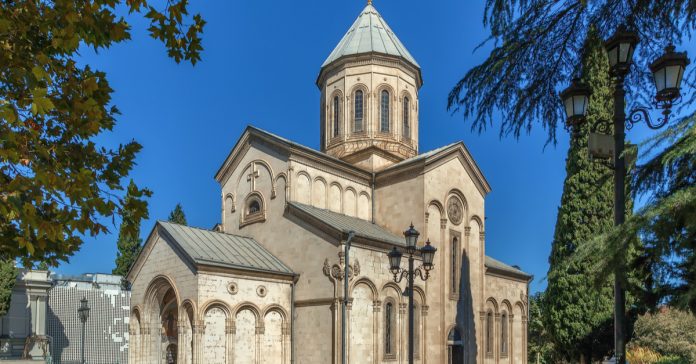
Where is here? The Church of St. George's Confession is located on Rustaveli Street, in one of the busiest spots in the city. Located opposite the parliament building, the church is a Georgian Orthodox church. With its central location, this place is among the historical places not to be missed in Tbilisi for visitors. The building was built in 1753 on the site of a brick church at the request of the Amilakhvari family.
The design of Kashvet Church is based on the medieval structure of Samtavisi Church and the architect of the church is an architect named Leopold Bilfeldt. The church was built between 1904 and 1910. The construction was financed financially by the bourgeois part of Georgia. The church has a very ornate structure and the frescoes inside the church were painted in 1947 by the Georgian painter Lado Gudiashvili. Although the church was closed by the Soviet government in 1920, it was saved from demolition.
Why should I go? Kashveti Church is one of the oldest churches in the city, dating back to the 6th century, and is a historical monument admired by visitors with its ornate architecture. Therefore, we recommend you to see this beautiful church.
4. Betania Church (Betania Church)
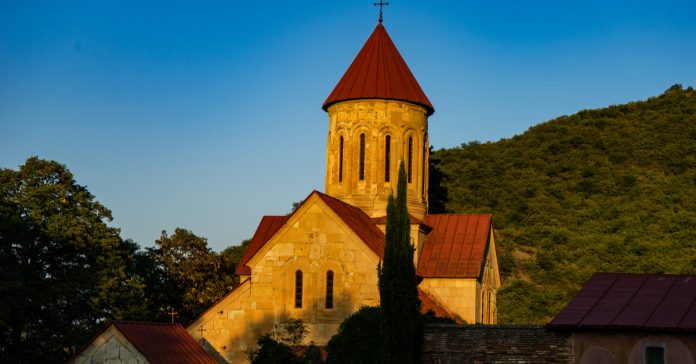
Where is here? The temple, built with a cross dome as a typical example of Georgian architecture, is located in the village of Kveseti in Didgori district, 16 kilometers from Tbilisi. Frescoes depicting Queen Tamar, Queen Tamar's son Lacha and Tamar's father George III are preserved in the monastery, which was used as the tomb of traditional Georgian lords.
The monastery consists of two churches. The small basilica of St. George was built in 1196, and the main temple, the Church of the Virgin Mary, was built in 17-18. It was built over the centuries. This monastery complex, which had been lost for centuries, was discovered by chance during hunting.
Georgian monks Father Giorgi and Father Ioane, who were declared as saints by the Georgian Orthodox Church, were appointed as servants of the monastery in the 20th century, worshiping and serving here. After both fathers died, he was buried in the monastery.
5. Metekhi Cathedral
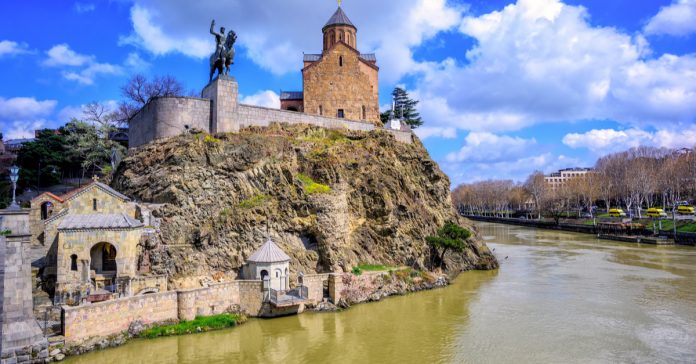
Where is here? Metekhi is an important ancient settlement among the ancient cities of Tbilisi, built on a rock on the left side of the Mtkvari river. Metekhi Church is the most important historical monument here. The sand-colored cathedral was built in the 13th century as a replica of a church destroyed by the Mongols. Next to the church is a statue of King Vakhtang I Gorgasali standing on a horse, and the first church was built by this king in the 5th century, along with a castle.
Metekhi, which came under Russian control in the 19th century, lost its religious purpose and was used for military purposes by building barracks by the Russians. Despite the opposition of the Local Communist regime in the 1980s, after the restoration works, the church was opened to worship again.
The church is built in the cross-dome style, and this style was most common in churches during the Middle Ages. Metekhi Bridge, which connects the church to the other side of the river, is also a detail that makes this place important, and it has the distinction of being the first bridge built in Tbilisi. The bridge was first built in wood in 1821 and later refurbished in metal in 1870. The current bridge was built in the 1950s.

0 Commentaires